Jon O’Reilly was the largest Irishman I had have ever met. He wasn’t fat; just over-proportioned. He had to pour himself into the passenger seat of my red station wagon. Getting out would require an act of sheer will and the bending of most of the laws of physics. But until he needed to do so, he was quite content to fill every square inch of the seat to my right, and then some. He lazily placed his foot up along the side of the door, which thrust his meaty thigh up into his face. His elbow spilled over the center console and jabbed me when I took a sharp turn. All the while, the warm December air swept through his red hair and fluttered the red, plaid collar which hung loosely around his pale, clammy neck.
“This is absurd!” he cackled. Jon had a great vocabulary. It made me smile when he used words like absurd. “It’s eighty-five degrees in the middle of winter!”
“I know,” I said, though far less enthusiastically than my passenger. “I hear it’s only thirty back home.”
“It just started snowing this morning,” he added. “I’m not exactly looking forward to going back. But I have the play still, and the book club is starting a new novel next week. I told Margaret I’d help lead the discussion at her place.”
“What book?”
He told me the title and gave me the gist – some obscure work from a yet-unknown Boston author. It sounded like something I would’ve like to have read, but knew I never would. But all that was Jon’s style – artsy and hip. He was well-read and knowledgeable in most fields of study – literature, pop culture, and even cooking. He fancied himself a real Renaissance man, a writer, and a self-made scholar, though he hadn’t seen the inside of a classroom since he barely passed Spanish II.
“Cool. I should check it out,” I said after the fifteen minute description of the book. That was the best I could do in most of our discussions. He knew a lot – or he was good at pretending – and most times, I didn’t care to pretend.
We didn’t say anything for the next few minutes. We were on our way back from the movies. We drove through the historic center of town, then took the main road leading back to the lovely suburban maze that was Green Gables. Jon stared out the window as we cruised past trailer parks tucked away within hundreds of tall, scrub pines, laden with creeping Spanish moss. It was the middle of the afternoon and the heat outside was nearly unbearable. But as long as the car stayed moving, the breeze was enough to keep the sweat from running down our backs. The breeze, however, was thick and humid, saturated with the scent of a fire burning somewhere nearby. Whatever value it gained in temperature reduction was lost in the pungent, acrid film it left on our tongues.
This is the world to which I had begrudgingly become accustomed in my short, but tiresome residency in the South. Jon, on the other hand, was experiencing the lifestyle for the first time.
“Not bad, man,” he said, still gazing off to his right.
“Yeah?” said I in disbelief.
“Quaint town. Palm trees. No winter. You’re living the dream, brother. I could see myself living down here.”
Four months. Four months I had been lonely. Four months I had had been desperate to return to my home. Four months I had watched The Departed and The Boondock Saints alternately in tearful, drunken stupors, longing for the streets of Boston and the friends with whom I had caroused the old haunts. For four months I had contemplated every escape plan – from the sensible to the downright ridiculous – to be reunited with the friends, family, and home that I had so foolishly left behind. And presently, Jon O’Reilly, one of my dearest friends from my beloved home, had expressed some type of favorable opinion on this strange and uncomfortable world. I was at a mental crossroads.
I had to make a decision. I had to react in one of two polar opposite ways. I could be the good friend. I could tell Jon the truth: that he would rue the day he ever decided to leave everything he held dear; that the torrid clime was despicable – intolerable in the summer, and tragic on Christmas; that southern hospitality was a myth; that he would be an unwelcome visitor for as long as he remained here, until the slow, decaying effects of loneliness and despair had devoured his last attempts at hope and belief and love and life. I would be cold and honest. I would yell at him, berate him. I would call him a fool – a selfish, thoughtless dreamer – for even considering leaving Boston. I would save him from calamity by my own affliction.
But then again… I could, perhaps, save myself. I could lie. I could spin my rotten situation into a deceiving tale of adventure and self-discovery. Words like “sweltering” and “oppressive” could be replaced with “sultry” and “tropical”; “backwards” with “old-fashioned”; “racist” with “culturally aware.” I could play to his artistic slant. I could drone on and on about what a blessing it was to finally have free time to create. Boston was holding me back. I was stifled, and distracted by the constant call of loved ones. I could get him down here with me. For that’s what all pitiful people do, from the drunk, to the addict, to the miserably lonely. They tug and pull and drag those around them down into the pit where they reside. They beg and plead and lie and pretend until their prey is caught, until there is another in their dark room to share in the torture that is the bitter, empty, hollow captivity that they have erected about themselves. Escape is not attainable, but commiseration is.
I had to make a decision.
“Did I tell you that Summerville has a playhouse?” I asked, forcing a smile. My stomach sank an inch lower in my body, but I didn’t care. I had made my decision. I would paint the picture. I would tell the fairytale. I would do everything within my power and imagination to end my seclusion.
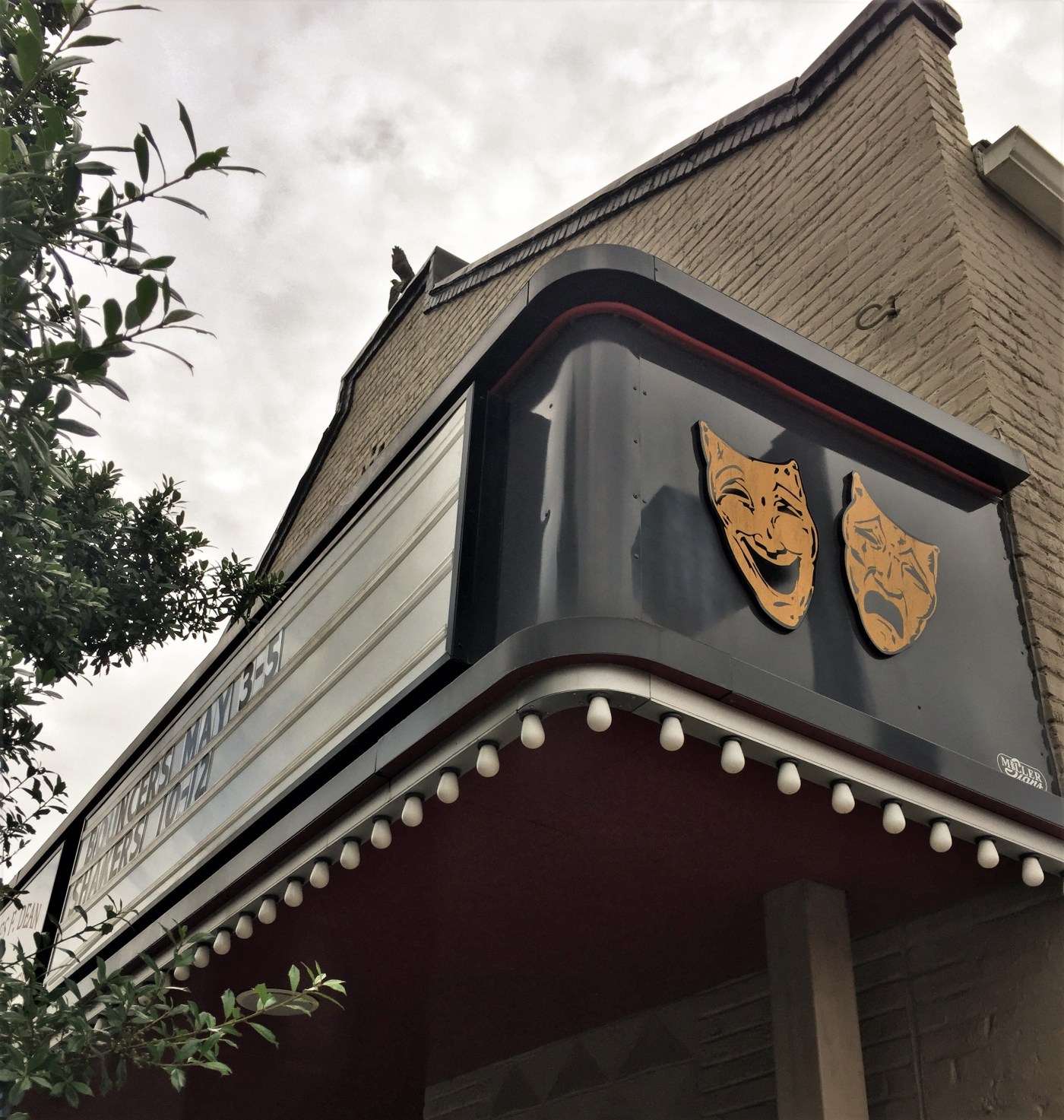
“You know, I saw an old marquis on our way through town,” he said with some interest. “Do they still perform?”
“All the time,” I said as if I actually knew. “That is a cozy little part of town though, huh? There’s a cafe across the street from the playhouse. And across from Sally’s store is an art gallery. I think they display a lot of local painters’ work there. Then there’s the Irish pub right next to that. It’s a fun place to be, especially since you can walk around outside any time of the year without freezing your ass off.”
“I’ll tell you something. I have been thinking about getting out of dodge, brother,” said Jon. He looked at me directly as he spoke.
There it was – the hole in the wall of my pitch black room. It was just a sentence, perhaps a passing fancy. But, to me, it was the tiniest of cracks that could be exploited for my own personal gain. I would chip at it, pick at it, and pry it as wide open as possible. I would lure and entice. I would twist the facts, distort the truth, and eliminate doubt. Logic and reason and the welfare of Jon O’Reilly no longer factored into my conversation. I would make the hole big enough. I would pull him into my room.
“If you ever needed a place to stay, you know we have two extra bedrooms, and a futon. We could clean one of them out for you.”
“It’s certainly an idea, though there’s quite a bit to consider.”
“Of course, I’m just saying it’s an option.”
That was enough for one day. Nothing I could say could stop him from stepping onto an airplane in twelve hours. If I pressed the issue any further he might become suspicious. It is an artful game you must play when tempting an individual to the precipice. The conversation would be rejoined. And though it was surely too early to say for certain whether Jon would come to stay with us, I nevertheless began to clear out a space for him in my room.
 B David Larson
Leave a comment